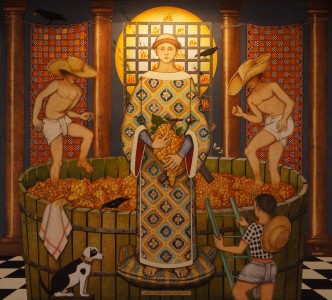
Bordeaux, a History

In August I made my second ever presentation to the North East Wine Tasting Society (after a successful look at German wines back in 2011) with a selection of wines from arguably the most famous wine region of them all, Bordeaux. I make no claims to be a Bordeaux expert, truth be told I hardly ever buy the region’s wines for personal consumption as I don’t trust the extreme variation in quality and price (not necessarily linked) in Supermarkets and wine shops. Yes, I’ve had some good ones, but I’ve also had some dire examples and it’s not always easy to spot which is which. However, even with all my reluctance to buy, Bordeaux’s influence and ubiquitous presence across the wine world is such that currently it still makes up over 8% of my cellar (rising to 12.5% if you include the last 2 years drinking).

In preparation for the tasting I not only researched the back stories of the various estates whose wines I was showing, but also of the region as a whole, both to improve my (lack of) knowledge of the Bordelais and also to fill out the evening itself. The wines and their reception will be posted shortly but here I set the scene with a potted history of Bordeaux across the Millennia which, while familiar to many, hopefully contains enough to keep novice and enthusiast alike interested.

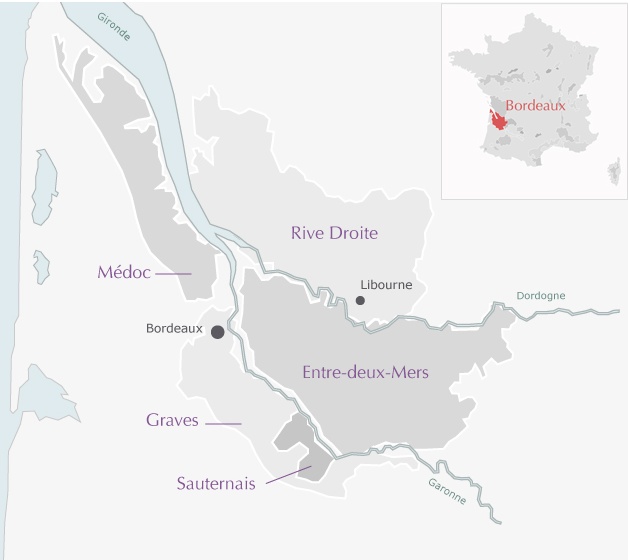
The area around the Gironde Estuary, where the rivers Garonne and Dordogne meet, shows traces of human settlement as far back as 35,000-10,000 BC and the region was heavily populated by the time of the Roman occupation when Augustus created the province of Aquitania in 27 BC. The Romans prized the local grape Vitis biturica (named for the Bituriges-Cubi tribe) – possibly an ancestor of Cabernet Sauvignon (& more directly of Carmenère). The Aquitanian (as opposed to Celtic) settlement of Burdigala was later to become Bordeaux, although whether this influenced the name or, as some claim, it is from “au bord de l’eau” – “the water’s edge” – who knows?

The first large vineyards were on the right bank of the Gironde since most of the “left bank” & current Médoc vineyards were a swamp and remained so for the next 1,500 years. The maritime climate and location on the 45th parallel provided for temperate winters and long warm summers, perfect conditions for growing grapes. The export of Gallic wines to Rome was in such quantities that, in 60 AD, Italian vine-growers asked the authorities act and by Imperial decree half of the vineyard of Gaul were uprooted, but they rapidly increased again. During the 4th Century, in Aquitaine, the Gallo-Roman poet Ausonius (Decimus Magnus Ausonius, 310-363 AD, born in Burdigala) claimed that “the Glory of Bordeaux and its universal fame comes from its wines”. Like Montesquieu, the French philosopher who lived fourteen centuries later, Ausonius was just as proud of his vineyard as his writings and his name lives on with the St. Emilion flagship estate Château Ausone (as does another Roman, Figeacus, in Château Figeac).

Little is recorded of Aquitaine in the early Medieval period except as a pilgrimage route to Santiago de Compostella, with monasteries across the area, most famously at St. Émilion – religion and wine production are closely linked across Europe at this time so it is safe to assume the region continued where the Romans left off. Bordeaux’s destiny was sealed in 1152 with the marriage of Aliénor, Duchess of Aquitaine, to Henry Plantagenet (who became Henry II of England) after a failed marriage to King Louis VII of France.

Aquitaine and Poitou became part of the English crown and Bordeaux especially prospered until the end of the Hundred Years War when Talbot, Earl of Shrewsbury, lost the Battle of Castillon in 1453. During that time the English cemented their love affair with light bodied Clairet (locally used to describe a dark rosé) which became “Claret” to the English export market; mainly wines from Graves, St. Émilion, Entre deux Mers and Blaye. Although more wine was being produced further inland, including Bergerac and the “Black wines” from Cahors, trade was controlled through the port of Bordeaux with (unfair) export and tax restrictions – the Police des Vins – favouring local production, so often wines from the outside areas were never sold or spoiled. Trade to England reached as much as 40,000 tonneaux a year (1,000 tonneaux is approximately equal to 1 million bottles).

Now part of France it was in the 17th Century that Bordeaux jumped forward significantly. In 1599 King Henri IV hired Dutch engineers to drain the Médoc marshland revealing the gravel and mineral rich soils which were perfect for the ever expanding vineyard, at the same time helping to supplement a large export market back home in the Netherlands. Not that the Graves was suffering, as in 1663 Samuel Pepys mentions Ho Bryan (Haut Brion, Pessac-Léognan) in his diaries, the first written mention of a wine “brand”. Haut Brion dates back at least as far as 1533 when Maison Noble d’Aubrion was acquired by the Pontac family – a name that springs up frequently in the region.

The 18th and early 19th Century was a time of French colonial trade as export to England fell to 10% due to almost constant war between the imperial nations. The first commercial bordelaise-shaped bottles appeared at this time and the spread of vineyards in the Médoc increased dramatically. This was recognised in 1855 when history was set in stone due to the Paris Exposition. A list of the best Bordeaux wines (determined by price) was drawn up for Emperor Napoleon III by local brokers and all but one (Haut-Brion) were from the Médoc, now the powerhouse of the region despite its relatively late start compared to the Graves and Right bank. The 1855 Classification is so ingrained in Bordeaux psyche that in 150 years there has only been one change to the  lists, when Château Mouton-Rothschild was elevated to First Growth status in 1973.

But this is also when things started to go wrong. The industrial revolution and free trade agreements brought an age of prosperity for the vine-growers but trade, especially with America, also brought disease and in the early 1850s Oïdium (Powdery mildew) decimated production. Sulphur treatment was quickly identified as a cure, but then Phylloxera arrived from the U.S. in 1869 and from 1875 to 1892 almost all the Bordeaux (and European) vineyards were ruined, especially as Downy mildew hit in 1882 at the height of the plague. By 1888, when copper sulphate was identified as the Downey mildew cure (in “bouillie bordelaise” – bordelaise porridge) enough damage had been done to affect the area for the next 60 years with many families forced to sell up.

Bordeaux replanted using the new technique of grafting onto American rootstock (Vitis aestivalis) to defeat phylloxera, some quicker than others (Haut-Bailly still has about 4ha of ungrafted vines dating from before 1907). Slowly, interrupted by 2 world wars and a depression, the area started to recover, with the hard frosts of 1956 the last major disaster for the region. Bordeaux today is France’s largest wine growing area at over 120,000 hectares – 1.5 times the size of the Rhône and 5 times larger than Burgundy. At the start of the 20th Century more white grapes than red were planted producing an ocean of dry to semi-dry wine usually labelled Bordeaux blanc, Entre-Deux-Mers or Graves. After World War II growers began shifting to red varieties, with most people thinking of Cabernet Sauvignon, even though it is only planted on 26% of the total area. Merlot is actually the most common, dominant in right-bank blends and a large component of left-bank ones, with Cabernet Franc, Malbec (Côt), Carmenère and Petit Verdot used to a lesser degree. Assuming a planting density of 6000 vines per ha (some properties will plant 8000 or even 10000 vines per ha) the region’s 120,000 ha are home to at least 720 million vines, with 10,000 producers making over 700 million bottles.

In an attempt to improve, or at least regulate, quality the first guidelines for wine origin were established in France in 1911, with the Institut National des Appellations d’Origine (INAO) formed in 1935 to manage the formal AOC system. In Bordeaux the the C.I.V.B. (Conseil Interprofessionnel du Vin de Bordeaux) was set up in 1948 who, together with 18 winemakers’ associations, coordinate the quality regulations and promotion of the 54 regional appellations (57 before Côtes de Bordeaux became official). Today, 98% of Bordeaux production is AOC – although many argue that changing techniques and climate mean such stringent regulations are archaic. Classifications were also brought in for the Graves, the Médoc Cru Bourgeois and St. Emilion – not without controversy.

With increased inheritance taxes in the early 1980s the trend of ownership moved from family to corporate and in the past 20 years the number of winegrowers has halved and the average size of estate has increased, from 5 ha in 1987 to almost 13 ha in 2007. Increased investment has led to prosperity, at least for the top Château, and allowed new technology, renovation in the cellar, better selection, new oak etc. to create arguably the best wines in the world.

Sadly all we hear about now is the next vintage of the century, the Chinese buying up wines (and properties) and the soaring prices – even the second wines of some estates are beyond the reach of most. Meanwhile, quality and prices vary so much amongst the vast number of lesser estates that the average consumer often hasn’t a clue on what they are buying when they see “Bordeaux” on the label. This may help explain why there was not a single Bordeaux wine on show at the recent 2012 Northumbria Food & Wine Festival in Corbridge. For me it means I tread warily when buying from the region, so it was with a mixture of trepidation and curiosity that I put together the NEWTS tasting and which prompted this condensed history lesson.

Salut!

Posted in In Vino Veritas, Wine Regions | Tagged , | 1 Comment

Northumbria Food & Wine 2012 – The Wines

The previous 2 posts have reviewed the Festival as an event and the masterclass talks, but I’ve left this last post to discuss the wines themselves, although some have already been hinted at previously. I’ll work through the wines I tried from each of the tables in alphabetical order.

Austrian Wines Direct: John and Marion McEvoy had lined up a selection of whites and reds from across Austria and with five Grüner Veltliner (Grü-V) on show it was difficult to know where to start!

  • Weingut Allram 2010 Hasel Grüner Veltliner, DAC Kamptal (12.5%). A soft and citrusy wine, rich and integrated with a touch of tangerine.
  • Weingut Allram 2010 Strassertaler Grüner Veltliner, DAC Kamptal (12.5%). Nettle and white pepper nose with its mellow, clean acidity and slightly sweet, herbal finish.
  • Weingut Seher 2010 Grüner Veltliner, DAC Weinviertel (12%). Served a little cool at first but once it warmed up intense aromatics developed with ripe lemons. A smooth, rich texture although maybe not the flavour to support it, nor particularly peppery, but elegant and balanced.
  • Weingut Holzer 2010 Grüner Veltliner, DAC Traisental (12.5%). Light aromatic nose with hints of lime, herbal with some white pepper, but a slightly bitter dry taste lacking a little in structure.
  • J. Heinrich 2010 Siglos (Zweigelt with a splash of Blaufrankisch), Mittelburgenland (12.5%). A light-medium bodied red with plenty of character.
  • Weingut Jordan 2009 Cuvée 1858 “Memories & Generations” (Zweigelt, Blauburger, St. Laurent), Weinviertel (14%). Very smooth with velvety tannins. A dangerous wine, so easy to drink with light, red berry fruit and a touch of chocolate.
  • Rotweine Lang 2009 St. Laurent Classic, Burgenland (13.5%). Youthful fruit, almost Beaujolais (Cru) in style, with fine tannins, enjoyable.

Bin21/PortoVino: Paddy Eyres and Alan Holmes were on good form as usual, excellent banter and generous pours coming from a popular selection of drinking wines. I just wish they’d made a hand-out of what wines they had on their stall.

  • Quinta da Romeira 2010 Prova Regia Arinto, DOC Bucelas (12.5%). Rich, fruity & a little sweet this had a lovely floral tickle on the nose, a little spice and good length on the finish.
  • Bodegas Escorihuela 2009 “1884 Reservado” Malbec, Mendoza (14%). A Subtle, meaty nose with good, chewy fruit on the palate with mild tannins. Very easy drinking and still youthful with another 2-3 years where it could improve further.
  • Quinta da Casal Branco Falcoaria 2006 (Castelão, Trincadeira, Cabernet Sauvignon, Touriga Nacional & Alicante Bouschet), DOC Ribatejo (14.5%). This was a complex, structured red wine and a beautiful accompaniment to beef Rendang. As I finished off the last of the 2006 Alan opened the new batch of 2008 (DOC do Tejo, in a different style bottle) to compare. This was a much lighter wine which, while pleasant enough, didn’t have the character of the ’06.
  • Rocland Estate Chocolate Box “Cherry Chocolate” GSM 2008 (9?), Barossa Valley (14.5%). Very, very fruity with a meaty aspect on the nose. I’d tasted this last year and found it a touch blowsy, but this time it had an edge to it that I didn’t remember; powerful, rich dark berry fruit with some sweet acidity on the finish, an excellent wine.
  • LGI Les Calades Vin de France 2011 Carignan 12%. A simple, young, light and fruity nose with equivalent palate. It had juicy fruit with a little bitter twist on the finish that adds character – a good value quaffer for 1 token.
  • C da Silva Dalva Tawny Port, an old favourite and extremely moreish, although it seemed a touch lighter than I previously remembered and the alcohol a bit more obvious. However, it complemented Kenspeckle’s walnut & amaretto fudge and Dillies Pepper dark chocolate perfectly!

Carruthers and Kent: Claire and Mo had their hands full over the 2 days as their table was regularly mobbed, understandable with some of the beautiful wines they had on show (a couple of which sold out before I got a look in!).

  • Château Ka Source Blanche 2011, Bekaa Valley (13%). Delightfully weird wine of the show, a blend of Muscat, Sémillon and Sauvignon Blanc, which dominates on the nose. Good acidity, balanced, chewy flavours with a chaotic melange of tastes – including fudge! – and a toasty finish.
  • Painted Wolf “Penny” 2011 Viognier, Swartland (15%). A low production – only 2300 bottles made – with a difficult nose to describe but delicious floral honey flavours with some sweet lime and a bitter aspect on the finish.
  • Vila dos Gamas Antão Vaz, 2009. (13%) First try of this Portuguese grape for me and it had a light lemon zest nose, delicate on the palate and a fudge/toast finish. Very good QPR for £10.49.
  • Bodegas Abanico Solera Grand Reserva, Emporda (15.5%). Fortified Garnacha Blanco made in a rich Solera style and Oh My God that’s good! Burnt toast, marmalade with a salty touch, an absolutely delicious, moreish wine.
  • Vigneti del Vulture 2010 Pipoli Aglianico del Vulture, 13.5%. A woodsmoke nose with fresh berry fruit, some tannic structure and a long finish. Another £10 wine with excellent QPR.
  • Domaine Champaolou Sparkling Vouvray (Chenin Blanc) Loire. This had a blackcurrant leaf nose with some yeasty/toasty aspects, sharp with good savoury complexity.

Dennhöfer: As usual this Newton based company had their wine-bar stand set up but for some reason seemed almost invisible on the first day, at least to me. I made up for this a little on the second, especially when I realised how generous their pouring measures were!

  • Freiherr Von Schleinitz 2009 Riesling, Mosel (10.5%). Light, off-dry sweetness but with enough character and complexity to keep it interesting. Moderate length finish.
  • Domaine Michel Schoepfer 2006 Pinot Gris, Alsace (13.5%). One word….Superb. Another…value. This had a delicate floral nose and a golden colour. Richly textured, with a creaminess to it. There was some gentle bitterness and toasty caramel on the finish, excellent value for money at the show price of £8, pretty good at its normal price fo £9.30 too.
  • Germain-Saincrit Vignerons Château de la Roulerie 2010 Chenin Blanc, Anjou (13%). A cold, non-committal nose showing a touch of sulphur. It was pleasant with good acidity and honeyed flavours but was a little too light and slightly bitter on the mid-palate.
  • Ferraton Pere & Fils 2009 Côtes du Rhône Samorëns (Grenache, Syrah & Cinsault). A slightly meaty nose with soft fruit at the front, juicy sweet acidity and a dash of tannin on the finish. Côtes du Rhône could be subtitled “Reliable Reds R Us” and this safe, easy drinking wine with a touch of character fitted the category perfectly.

Dillies: It was good to see Andrew Foster from Hexham at his first festival, but as I’ve previously tried & bought a wide selection of his (& Marta’s Portuguese) wines then I didn’t try so many over the weekend. He did, however, have a couple of unique offerings.

  • Stopham Estate 2010 Pinot Blanc, West Sussex (10.5%). The only English wine at the festival (bettering Bordeaux’s showing by 1!). An initial hit of aromas that suggested Sauvignon Blanc, but they mellowed and sweetened. Clean & dry, a good white but not getting anything that suggested Pinot Blanc typicity.
  • Valdivia Fino Seco, Jerez (15%). A dry sherry with tangy-sharp, nutty flavours and a “just chemical” aspect. The only Sherry I tasted at the show and an enjoyable one at that.
  • Weingut Fred Loimer 2010 Lenz Riesling. Kamptal (12%). Crisp acidity on the palate, light bodied with a smooth mid-palate. Initially comes across as a little simple behind the bracing acidity, but well made.

Pacta Connect: Coming up from Brighton for the festival Judith Burns & Trevor Long had a great set of wines. Trevor certainly had the commercial patter when pouring, possibly a touch over the top, but, as I’ve already mentioned in an earlier post, I had issues with their token pricing compared to the other retailers, which meant I only tasted 4 of their wines (one of those during a Master Class).

  • Cattunar 2009 Chardonnay, Istria (13%). Light citrus sweetness, a rich, mellow, creamy white – warm for its 13% and not unpleasant for a Chardonnay.
  • Cattunar 2009 Malvazija Istarska, Istria (14.6%). Herbal nose suggesting bitterness but definitely not bitter in the mouth. Quite rich, dry but smooth and doesn’t show any sign of its alcohol.
  • Cattunar 2008 Muskat Bijeli Momijanski, Istria (11.8%). Light scented, sweet straw nose, very floral and lightly sweet, heading towards off-dry. A beautiful fresh wine, very pleasant drinking.
  • Piquentum 2010 Blanc Malvazija, Istria (12.8%). A savoury, musky nose with a purity of flavours – light, clean and fresh, a touch grapey with a little lime.

The Hop, The Vine: Another of the presenters that didn’t have a bespoke list for the festival, and whose normal list doesn’t mention vintage or alcohol, so details are a little lacking I’m afraid.

  • Langmeil Viognier Great White Hope Barossa. A bitter herb nose with a dry, slightly tart, citrus taste, but quite elegant textures and complexity.
  • Columbia Crest Horse Heaven Hills Merlot, Washington. This had a mature, sweet/smoky nose with some blackcurrant and chocolate. On the palate it was smooth with fine-grain tannins, chocolate on the mid-palate and into the finish – a damn tasty wine.
  • Giné Giné 2007 Priorat (14%). Grenache, Carignan and Cabernet Sauvignon with a nose to die, with rich, oaky vanilla and smoky fruit. Clean acidity on the palate, fine tannins at the edge of the tongue, a complex, integrated wine with light fruit and toasty oak, delicious!
  • Taltarni Lalla Gulley 2006 Riesling, Tasmania (11.5%). Fresh nose for its age just a hint of petro chemical (actually I’d have liked more, but that’s just me!). Clean with a touch sweet lime, a good food wine.
  • Babylon’s Peak 2007 Syrah/ Carignan, Swartland (13.5%). Jammy aroma with a little cooked fruit at the back of the nose. Surprisingly lifted on the palate with a lot of flavours and aromas going on, but a little too jammy needing more grip – would be an excellent curry wine.
  • Zephyr Wines 2008 Gewürztraminer, Marlborough (14%). A full on Gewürz’, richly flavoured and textured but, like others I’ve had recently, just a bit too over the top and a little flabby.

Tyne Wines: Irwin Thompson was as cheerful as ever pouring his selection of Beaujolais and southern French wines, and I managed to taste through a few more than usual.

  • Domaine Daulny 2009 Sancerre, Loire (13%). A blend of Sauvignon Blanc from the 3 Sancerre Terroirs (caillottes: chalky soil,  terres blanches: Kimmeridgian limestone and clay, Silex: Flinty soil). A hint of grassiness and pungency on the nose, clean and dry at the front of the mouth, mineral on the mid-palate with a subtle, light finish.
  • Château la Croix des Pins 2007 Rosé (Grenache), Côtes du Ventoux (13%). Herbal with sweet tannins, not too acidic, a tasty rosé for contemplative drinking.
  • Domaine de la Madone 2009 Fleurie, Beaujolais (13.5%). A ripe nose typical of Carbonic maceration, a little light but balanced and well made, a complete wine.
  • Château Puy 2006 L’Etiquette Rouge, Minervois (14%). Notable in that it was used as an example for Helen Savage’s “Faulty Wines” talk during the Master Classes but which most, including myself, agreed was delicious. This smooth, fruity red had a subtle hint of “Barnyard” that indicates a touch of Brettanomyces.
  • Château Puy 2008 Les Yssieres, Minervois (13.5%). Smoky Savoury nose with a smooth palate, good complexity, developed flavours and light tannins. An excellent medium bodied wine ready for drinking.
  • Christope Savoye 2005 Chiroubles, Beaujolais (13%). Light fruit nose, a touch of character. Young berries, light acidity and barely any tannin, drinking very well.

With so many other distractions at the Festival I am not too surprised I only managed to taste my way around 42 of the retailer wines over the weekend (getting through a fair few tokens in the process). As always there were likely other wines that I would have raved about had I tried them, and some that I know are good but have had before.

A few wines stood a little taller than their brethren (with 3 bottles* coming home with me on the Saturday evening). Here, in order of how much I liked them on the day, are my top 10 of the show;

Slainte!

Posted in Local Tastings, N.E. Retailers, Wine Festivals | Tagged , , , , , , | Comments Off on Northumbria Food & Wine 2012 – The Wines

Northumbria Food & Wine 2012 – Masterful Talks

As mentioned in the general review post on the 2nd Northumbria Food and Wine Festival the bar was raised for 2012 with a Master of Wine and 2 MW students joining Marta Mateus and Max de Nardo on the bill. Sarah Abbott MW, Karen Hardwick and Helen Savage all included a flight of wines to complement each of their talks, amounting to 8 mini-Masterclasses over the 2 days from professional wine educators.

Sarah Abbott MW is no stranger to the region, having gone to Newcastle University and Durham Business School. She began her career in wine in 1996, specialising in Burgundy, Italy and Australia before becoming a Master of Wine in 2008. Sarah lives in Bedford she where runs Swirl Wine Events and was only at the Festival for the Friday (having to dash back down south to start her summer holiday on Saturday evening) but gave 2 informative and humorous talks on “Getting what you pay for” and “New Frontiers”.

The first was a comparison talk showing 3 pairs of wines which shared a common variety or style. Various aspects and components, including the reputation of the producer or region, affects the quality and price of what you get in your glass and Sarah discussed what to look for when tasting to judge their characteristics .
We started with Sparkling wine styles with a (Passaparola) Prosecco (£10) which was fresh, cool & light with a floral, lemon-citrus sweetness. There was no real depth or length but it was a good value wine to drink in the sun. In comparison a (Edouard Brun) Champagne (£29) had less fruit on the nose, but plenty of structure and texture on the palate with a dry, clean acidity, a little grapefruit and a longer finish. It was undeniably elegant, but at three times the price I’m just not sure whether it was that much better than the Prosecco?

Sauvignon Blanc was the variety of choice next with a New World/Old World match up. In the New corner the 2012 Fairview Darling (£9) with tropical fruit in the aroma and taste, a little thin on the mid-palate but a good balance of flavours and a long finish. Good value, if a bit one dimensional. In the Old corner was the spiritual home of the grape, Sancerre, and the Domaine des Brosses 2010 (£15) with its light nose hinting at sweetness but a contrasting palate showing a salty/mineral taste with clean, sharp acidity and a long, persistent, chalky finish. This was delicious and absolutely worth the trade up, tying in with Sarah’s comment that “a good wine will always give you more”. She then gave an unexpected insight into her thoughts by saying “unripe Sauvignon Blanc is like being whipped”…indeed!

We moved swiftly on to red wine and the Merlot grape, with the Chilean Viña Leyda 2010 Reserva (£10) with its fruity/smoky nose with young, ripe, slightly herbal fruit. Medium bodied with good structure, this was a very popular wine with the audience; balanced, not too tannic and very easy to drink – something Chile has become well known for. Then to France for a 2006 Premier Côtes de Bordeaux from Château Carignan (Carignan in name but not variety, with 70% Merlot, 20% Cabernet-Sauvignon and 10% Cabernet-Franc. £16). The nose was smoky with a touch of liquorice, the flavour was lean at front but developed on the mid-palate and finished with toast and toffee. This time round there was some debate on whether the cheaper wine was actually better (more popular at least).

Sarah was very relaxed and engaging during the talk and that style continued later in the day when she returned to show us some wines not yet available in the UK but that we might be drinking in the future.
She started with the catchy line “Posh Australia is coming” as she poured a taste of the House of Arras 2004 Grand Vintage Tasmanian Sparkling wine. This was excellent quality; red berries on the nose and palate, some herbs and zesty, almost enamel stripping acidity with a long, dry finish. Australia is trying to trade up on its image of cheap bulk brands or fruit driven styles and create a new generation of distinctive wines where quality, style and a sense of place are the driving factors – the House of Arras was doing a good job at highlighting that.
Then to Turkey and a family business, Arcadia Vineyard in Northern Thrace, and three of their wines.
The 2011 Sauvignon Blanc/Narince was smooth, fruity and ripe – so much that I’d have guessed Chardonnay as the variety, but the Sauvignon did come through after a while. Their second offering was a Sauvignon Gris which had a curious, gunsmoke nose with a strong mineral component, full on the palate to start then a tart citrus acidity with a light finish, one for lovers of lean wine. Finally a very pale Cabernet Franc/Merlot Rosé which had a light, sweet nose and a long finish, ending dry and very enjoyable.
Turkey has a long history of wine making which halted under the Ottoman rule but, as one of the most progressive of the Muslim countries, ventures like Arcadia (driven by the female side of the family) are reintroducing Turkish wines to Europe. My only concern is that, with so many indigenous grapes to choose from, the estate has mainly international varieties planted and only a little Öküzgözü and Narince.

Karen Hardwick is originally from Ayr but now lives in York and runs the Wine Academy (winner of 2011 Riedel Wine Educator of the Year) as well as being a fellow MW student with Helen Savage (both are members of the Association of Wine educators). She said at the start that her forté is on the technical aspects of the wine industry and had chosen two themes for her Saturday talks; “Alcohol and why it gives winemakers a headache” and “Why is New Zealand Special?”.

A discussion on alcohol seemed a pretty good subject anyway, but when Karen said that that the UK government wants 1 billion less units of alcohol consumed by 2015 (which I hadn’t realised) then it is even more topical. She first started with options available in the vineyard to reduce the alcohol content in wine.
You can pick the grapes earlier, so that there is less sugar to convert to alcohol (each 17g of sugars in 1l of juice gives 1% of alcohol after dry fermentation) but the danger is unripe tannin (from the grape pips), excessive acidity and underdeveloped flavours will make the final wine unpalatable. Another options is to plant different varieties (such as Syrah instead of Grenache) or change to a less vigorous rootstock to reign in growth and ripening – to use a casserole analogy “slow cooking” the grapes allows for better development of flavours than fast ripening. Unfortunately for the Old World most of the Region of Origin regulations restrict what varieties can be planted and where, even if climate change is starting to make those restrictions outdated.

Once the grapes are picked then other options for reducing alcohol include using alternative yeast strains which don’t ferment to dryness or to stop fermentation, both of which leave residual sugar in the wine. To demonstrate this style a Dr Loosen 2011 Riesling (8% abv. £9) was poured, a comparatively low alcohol wine without any artificial interference. Made in a sweeter style it was zesty with a little spritz, light and enjoyable with the reduced alcohol part of its design and not detracting from the flavour. As a Riesling fanatic I loved Karen’s analogy that “Riesling is Audrey Hepburn – Elegant and Misunderstood”.
A more artificial technique is the Spinning Cone which allows partial vapourisation of wine entered into the system, the more volatile components rising off (and alcohol is very volatile!). The next wine was an example of this, the First Cape Californian Zinfandel (5.5% abv. £5.50 from Tesco). I was unsure of the nose and on the palate it was like a simple fruit juice, there was no texture, no acidity – this was my first low alcohol wine made using this way and I hope to never come across it again!
It wasn’t clear what technique was used for the E&J Gallo Summer Red (10.5% abv. £6 from Tesco) a light see-through, non vintage red with young, almost Beaujolais style fruit which just felt wrong – it was too sweet, too berry, too “nice” in an alco-pop way. Karen suggested it as a dessert wine, which I could sort of see working, but not for me.

Spinning cone and Reverse osmosis are high-tech options to reduce abv. by about 2%. It’s estimated that 400 Bordeaux wineries use reverse osmosis, but it can heighten acidity and tannin. More surreptitiously there’s always the accidental “leaving a hosepipe running in the tank” gambit (illegal in many countries but that isn’t always relevant) which will definitely drop the alcohol, and probably the other taste aspects as well! For high alcohol wines another option is open top fermentation which can lose 0.5-1% alcohol by evaporation (the “Angel’s Share”). Of course lying on the label is another option – or shall we say “stretching the truth” – when it comes to a 17.5% wine that is perfectly in balance and where the winemaker is unwilling to compromise quality by diluting it.

The final 2 wines were examples of higher alcohol levels at 14% abv. (which nowadays is not really that high). Karen reminded us that “alcohol is the glue that binds the flavours together” – in balance it is an essential component of the whole wine experience, out of balance it can detract. I guess as an example of this the Namaqua 2011 Reserve Shiraz (£7 from Tesco) was poured, a meaty wine with tart tannins. Although a little too young it was still enjoyable but on the finish the alcohol made itself known with a touch of heat.
The final red was poured with Karen describing the Biodynamic farming of Domaine Roche Audran in France’s Rhône Valley. Their 2010 Côtes du Rhône (£8 from Tate Smith) is made from 60-80 year old vines and had a powerful nose of cooked plums and winter spice (someone said “the smell of Grenache”). This had strong, firm tannins, good integration of components and a cool finish, there was no overt signs of the relatively high alcohol at any stage of drinking, it was a lovely wine to finish the session on.

(For more on this topic read Jamie Goode’s Lower alcohol wines, A new retail category?)

Karen’s last talk was a celebration of all things Kiwi and was backed up by a quartet of wines from Auckland based producer Babich (also available from Tate Smith). She seems to have soft spot for the country and covered a review of NZ winemaking history with a special focus on Kevin Judd, legendary winemaker at Cloudy Bay (now at Greywacke) whose use of temperature controlled fermentation captured those (now regarded as typical) pungent Sauvignon Blanc flavours. She commented that in the mid-80s access to Cloudy Bay was akin to “scoring” illicit substances!

We started with the Babich Black Label 2011 (£8), a barrel-aged Sauvignon Blanc which is Karen’s “House White” and designed to be a restaurant wine rather than a general consumer bottle. It had the rich Sauvignon pungency – Karen suggested green beans – and a pleasant smooth viscosity with a crisp, zesty finish – not as bitter or vegetal as some. The world may be starting to tire of Kiwi Saivignon though, especially with the belt-tightening going on due to the global recession, so producers are now looking to trade up to more profitable varieties and techniques. Mentioning the use of oak she likened it to the Wonder Bra, it can be used “to add curves” to a wine (but also to mask faults), although the next white was an example of a wine that needed no enhancements; the Babitch 2011 unoaked Chardonnay (£9) showed pure fruit (and a touch of reduction) on the nose with fresh acidity on a rich palate.
Pinot Noir next, a difficult grape to grow and referred to as “the Bitch…costly, temperamental, but when she’s good…!”. The Babitch example was their Marlborough 2009 Pinot at £11; a smoky, gamey nose, velvety tannins and good flavour balance with a sweet berry mid-palate and food friendly acidity, a very enjoyable Pinot.
Finally Karen talked about Hawkes Bay and the growing of grapes where nothing else would grow in the Gimblett Gravels – low fertility preventing the vines from overproducing and concentrating grape flavours. The Babitch Gimblett Gravels 2009 Shiraz (£11) had an elegant nose with mellow, soft smoke and a good dash of fruit. Dry tannins and acidity offset a long, sweet finish.

Both Babitch reds were a step up in quality to the whites and well worth the slightly higher price. Karen’s mentioned her taste test for deciding how much you’re going to enjoy a wine – keep it in your mouth until you’re bored with it. I like the idea for reds but trying it out on a sharp Austrian Riesling I feared for my dental health and swallowed instead!
As a sign-off to the talk confirmed what the cognoscenti are already aware of, that with the emergence of Canterbury and Central Otago along with a re-defining of the traditional regions we’re starting to see the very best of New Zealand.

Helen Savage followed Sarah on the Friday and Karen on the Saturday with 2 talks each, 4 in total over the weekend. As well as this she was a seemingly an ever-present support for the festival organisers so it was with well deserved applause that she received a bouquet of flowers on the Saturday in recognition of her work (before she flew back to France to finish off her summer holiday!).
When not in France Helen lives in Newcastle and is well known around the local wine scene; hosting regular tasting events with Carruthers & Kent and Vine Visit and as a regular columnist in The Journal. Helen’s topics started with “How to spot a dodgy wine (Wine Faults)” and “French Country Wines” on the Friday, finishing with “Is Bordeaux worth bothering with?” and “What a summer!” on the Saturday.

I missed the beginning of her first talk but joined as she discussed oxidation and got a taste of a browning French Sauvignon Blanc with plenty of burnt orange, although just to prove the point that wine enjoyment is a purely subjective experience I quite liked it!
Acetaldehyde in wine was discussed next with a wine poured blind show the effects it can create in the glass; dry, tangy-sharp, nutty flavours with a “just chemical” aspect. I’d already realised that Helen was being a little tricky and had poured a wine deliberately made in this style, revealing a Fino Sherry (and a tasty one at that from Dillies, the Valdivia Fino Seco) which still managed to surprise a few people!
Helen then went through a roll-call of the other guilty parties; reductive/sulphur components, volatile acidity, Brettanomyces (“Brett”) and TCA (“Corked”) spoilage. To highlight the shades of grey between some of these being described as faults or flavours she poured a Château Puy 2006 L’Etiquette Rouge Minervois from Tyne Wines, which most agreed as was delicious but had a touch of Brett – the barnyard aspect that some people love, others dislike and American see as an affront to nature.

Helen is an unashamed Francophile with a holiday home in the South West so her second talk was on French Country wines and how they exhibit a “sense of place”. She started with a sparkling Vouvray (Domaine Champaolou, from Carruthers and Kent) which was sharp with good complexity, a great confirmation that sparkling French wines don’t have to come from Champagne.
Staying with the grape and the region was a dry Anjou Chenin from Château de la Roulerie (Dennhöfer) with a non-committal nose showing a touch of sulphur. It was pleasant with honeyed flavours but was a little light and slightly bitter on the mid-palate.
Helen stayed in the Loire but moved onto red with the Cuvée Troisgros 2011 Côtes Roannais from Domaine Robert Sérol, an old-vine Gamay with a youthful nose and smooth, ripe, warm red berries on the palate. It wasn’t particularly tannic or acidic, but didn’t need to be, a  style of wine for enjoyable drinking right now.
The final wine to taste was the Château du Puy 2008 Les Yssieres Minervois (Tyne Wines) with its smoky, savoury nose, smooth taste and raft of secondary flavours, although little tannin – a perfect example that good French wine doesn’t need to come from a region starting with “B”!

Saturday saw Helen staying with France with a look at a region starting with “B”….  🙂
To be fair using Bordeaux as a subject made perfect sense after she commented that there was not a single Bordeaux wine available on the Festival tasting tables! Recovering from this revelation I realised that I shouldn’t have been surprised, most Bordeaux wines on local retailers lists start at double figures and head North with the region’s reputation sending mixed messages to average consumers. Helen commented that Bordeaux’s big problem is that it has some “Posh bits” that get all the headlines, setting the stereotype for price and exclusivity.
For tasting she set a benchmark with a very good U.S. wine made with a classic Bordeaux grape; the Columbia Crest Horse Heaven Hills Merlot (The Hop, The Vine). This had a sweet/smoky nose with some blackcurrant, while on the palate it was smooth with chocolate into the finish – a damn tasty wine! This was contrasted to a comparable Bordeaux Merlot, the Château Haut Maco 2008 Côtes du Bourg with a lifted, perfumed nose although a touch dry and tannic, too young and much too austere after the American.

As a prelude to the third and last wine Helen discussed how a spin-off from the Lincolnshire Pea Industry ended up in Bordeaux (and the rest of the wine world) with optical sorting machines improving the quality of fruit reaching the fermentation tanks (and also reducing labour costs to offset their high prices). One St. Émilion producer using such techniques to improve grape selection is Château Croque Michotte, an organic declassified Grand Cru Classé within spitting distance of Cheval Blanc and Pétrus. The 2005 vintage poured for us was something a little special to show what good Bordeaux is all about. The nose was a delight; lifted, rich and chocolaty with a touch of funk. Tannins were firm but fine, well integrated with subtle, elegant flavours and a long, lingering finish. This was a superb wine – and at £40 you’d expect that! – although Helen said this bottle was actually showing poorly and she’d hoped for better!

Helen’s final spot of the weekend was “What a Summer” with a discussion of changing weather patterns in Central Europe, from Alsace to Hungary, with more extreme seasons making winemaking much more challenging than in the past. As examples she went on a tour of some interesting wines available at the festival, a few of which I’d already tried (for more details of the local retailer wines poured during Helen’s talks look for my next post).
I missed the start so didn’t get another taste of the Stopham Estate Pinot Blanc from Dillies but joined as the Piquentum 2010 Blanc Malvazija from Pacta Connect was being poured with its savoury, musky nose. Dimitri Brečević follows organic principles and doesn’t use sulphur during the winemaking and, although I couldn’t say exactly what that is meant to do to the flavour, it had a purity to it; light, clean and fresh, a touch grapey with a little lime.
To be honest after that I spent most of the time savouring the wines so my notes on the talk tail off after that, but Helen poured one of my favourite whites of the show, the Allram Strassertaler 2010 DAC Kamptal (Austrian Wines Direct) with its mellow, clean acidity and slightly sweet, herbal finish. Finally she moved to a complex Spanish Red, the Giné Giné Priorat (The Hop, The Vine) which had a nose to die for; rich, oaky vanilla and smoky fruit, clean acidity, fine tannins at the edge of the tongue – delicious!

My thanks go out to the NF&WF organisers for managing to bring together 3 generous speakers over the weekend, my only complaint is that I spent so much time listening to the talks and sipping the free offerings that I didn’t around to trying as many of the retailer wines as I might have!

Slainte!

Posted in Local Tastings, N.E. Retailers, Wine Festivals, Wine Regions | Tagged , , , , , , , | 2 Comments

Northumbria Food & Wine 2012 – The Festival

The 2nd Northumbria Food and Wine Festival raised its Marquees at the Corbridge Rugby Club last month, fortuitously on the only truly dry weekend of summer up until that point (a welcome change from last year when the late planning meant a grey weekend in October). As expected from such a young event the format had changed a little, possibly in response to feedback on the obvious shortcomings experienced in 2011. This time round there was no Sunday schedule, instead a 2pm start on Friday 10th and a 12pm start on Saturday 11th August – although with the timing of the hourly train services along the Tyne Valley line from Newcastle they probably would have been just as well starting on the half hour instead.

Once again I took advantage of the ticket price allowing full access and took the Friday afternoon off work. On both days in I met fellow NEWTS when I joined the train at Prudhoe, Chairman Geoff on the Friday and (partner in wine adventurism) Elaine on the Saturday, although it was a little disappointing not to see more of the Society joining in the fun, especially as the weather was kind. The mix of local wine retailers pouring their choice wines, some of the best pop-up kitchen food in the region and a selection of wine experts talking about what they know best is such a good way to while away the hours!

The 3 marquees had been set up in at 90 degree angles to each other with an open seating area in the middle, a much larger and better spread arrangement than last year. External fencing directed you to the entrance where you picked up your tasting glass and 12 tokens to get you started (I managed to get through a lot more than that over the weekend!). This year round the ISCN tasting glasses arrived with the requisite 50ml indicator (the absence of which caused a great deal of confusion last year!) and token prices had been re-jigged to 50p each, allowing the stalls to offer 50ml tastings at 2, 3, 4 or 5 tokens depending on the value of the wine (although some stalls also offered 125ml pours as well).

The Food part of the festival was covered by 3 kitchens offering different styles of food to tempt the crowds. At the entrance was Bouchon Bistrot from Hexham and I was looking forward to trying something from their French menu, but sadly timing conspired against them as owner & Chef Greg Bureau was in hospital and staff problems at the Bistrot meant the kitchen was staffed by a crew from The Feathers. My late lunch came from here with a lovely Greek Mezze complemented by a Tasmanian Riesling (2006 Lalla Gulley).
A little further in was The Eclectic Picnic, a pop-up caterer run by Newcastle based Chefs Sally Walker and John Connell, a truly eclectic combination of Doonhamer and Kiwi with CVs that read like a culinary who’s who. Their Eastern inspired menu was a big hit on both days, with the Beef Rendang my Friday dinner – complemented superbly by a Portuguese red (Falcoaria 2006) – and the Teriyaki Salmon an excellent choice for Saturday dinner. I also meant to try their Truffle Brie cheese which looked inspired, but sadly got distracted and forgot to come back! Still, I hope to see them again (menu pic?).
Finally at the other end of the marquee (and really needing no introduction) was The Feathers Inn from Hedley on the Hill with chef Rhian Craddock and Festival co-organiser Helen Greer. Unsurprisingly it was also busy throughout, with the split roasted lamb selling out so fast I didn’t get a chance to try it for Saturday dinner! Instead a welcome Saturday lunch was the slow-cooked Ravensworth Grange pork with braised chickpeas and chorizo…mmmmm….!

Another aspect of the last two Corbridge Festivals have been the free wine talks given by various wine professionals and enthusiasts, including myself. This year the organisers did a superb job of bringing Internationally renowned experts Sarah Abbott MW and Karen Hardwick of York’s Wine Academy alongside festival regulars Helen Savage (journalist and educator), Marta Mateus (Portuguese Importer) and Massimo de Nardo (Prosecco producer). With such a prestigious line-up there was no need for me to take to the stage again, so I was happy to enjoy the wine and the talks from the other side!

Sarah Abbotts’s informative and humorous talks on Friday were a comparative look at “Getting what you pay for” and “New Frontiers”; Marta covered the Portuguese Wine regions; Helen had 4 topics (she was a real trooper over the weekend) on “Wine Faults”, “French Country Wines”, “Bordeaux” and “What a Summer”; Massimo discussed Prosecco, the region and the wine; Karen’s technical and detailed talks on Saturday were on “Alcohol and why it gives winemakers headaches” and “Why is New Zealand special”. As well as raising the stakes with the quality of presenters Sarah, Karen and Helen also increased the example wines used to complement their talks, meaning that they approached Masterclass status but for free. For me the 2 talks from Sarah, 4 by Helen and 2 by Karen were worth the ticket price alone and you can read why in my next post.

Saturday also saw a new addition to the format with “A Question of Taste” panel Q&A session hosted by local BBC Newcastle radio host Jonathan Miles. That was a good laugh, with Karen & Helen offering wine words of wisdom (including fielding a choice question on “minerality in wine”!) and Rhian and Sally for food queries – I don’t think I’ve ever seen anyone as initially uncomfortable as Rhian when Jonathan was “playing” with him!

Of course the focus of the festival was on the wine retailers, and there was a diverse mix of tables across the 3 tents. Most of the regulars were there representing the North East;

Missing locals were Proteas Wines and Michael Jobling, although they had presented at the Newcastle Wine Fair in July (as an aside it would be nice to see Richard Granger and The Wine Chambers at these sort of events once in a while as well) but Dillies of Hexham was making their first appearance at the festival with Andrew Foster showing a large range including several of Marta Vines Portuguese offerings.

Also at the show were two companies showcasing eastern European countries. Austrian Wines Direct, a family business with John and Marion McEvoy from Renfrewshire in Scotland, had a good selection of wines from a country whose average quality is unquestionable and Helen Savage was already out with her notebook resulting in a recent Journal piece.  Nearby were Croatian specialist Pacta Connect from Brighton, with Judith Burns & Trevor Long showing a selection of Istrian wines that most people, including myself, wouldn’t have experienced before.

Finally was Romanet, although to be perfectly honest I didn’t feel comfortable with their overtly commercial sit-down “free” tasting presentations as opposed to the token based pours which everyone else was doing – a couple of people I watched go through their tastings ended up opening their wallets or signing forms (I accept they may have done so because they really enjoyed the wines, but I got the impression of a hard-sell effect taking hold).

However, like last year there was still a great deal of difference between token charges and measures. Austrian Wines, Bin21 and Carruthers & Kent were the very reasonable on number of tokens per taste (with Tyne Wines, Dillies and The Hop, The Vine not far behind) averaging 2 tokens for wines in the £7-£14 a bottle range. Dennhöfer looked to be within this group, with their £6-8 wines at 2 tokens, but they were pouring extremely generously (enough to share with a friend and come back and try a different one!). At the other end of the scale Pacta Connect were doing their bottles for £15, a 125ml glass for a £3.50 but a 50ml pour for an inflated 4 tokens (£2) – this hit “grazers” like me hard so, sadly, I only spent a little time on their range and tasted less than I’d have liked – still, there was plenty others to choose from.
Rather than pad out this post with my impressions of the wines themselves I’ll post a separate piece shortly. All I’ll say about my top 5 just now is that they were from Austria, Lebanon, Alsace, Washington and Spain.

One thing I was curious about was the presence (or absence) of some of the other tables. Unlike 2011 there was only one “larder” stall, the delicious Kenspeckle Confectionary (whose Walnut & Amaretto Fudge went perfectly with Dalva Tawny Port), but no cupcake/oil/deli/seasoning companies (but Dillies did have some of their delightful chocolates as well). Wylam Brewery looked to be doing a steady trade (picking up as the evenings progressed) but RSPB and the Wildlife trust tables were rarely visited and I felt sorry for their staff who must have been frustrated, as must have been the Costco ladies as well, stuck at the end of the last tent opposite the Feathers. I said hello as I passed, but as I’m already a Costco card holder I wasn’t able to send any extra business their way! The ironic thing is Costco is an excellent source of quality wine – I regularly buy good bottles at reasonable prices and their Kirkland own label range has some of the best value U.S. wines available in the North East – but apparently their presence at shows is purely to try and drum up membership instead of being a full tasting presenter as they could have been.

So, that about covers the review of the festival. There were plenty of people there (probably at least as much as over the 3 days last year) and everyone seemed to be having a good time. There didn’t appear to be any disasters and I thoroughly enjoyed the wines, the food and the expert talks.

Here’s raising a glass to bigger and better for 2013!

Slainte!

Posted in N.E. Retailers, Wine Festivals | Tagged , , | 3 Comments

Château d’Yquem

What’s in a name? that which we call Sauternes, by any other name would taste as sweet. My butchering of the Bard aside, when it comes to the great sweet wines of Sauternes and Barsac there is one name that stands out above them all; Château d’Yquem, with its vines on the highest slopes in the area, is literally top of the appellation and considered so great that it was given a category all of its own at the 1855 classification – Premier Cru Supérieur.

I’m not going to try and recount its history here, that has been done many times before (try Chris Kissack’s Château profile on the Wine Doctor site) but suffice to say I’ve know about d’Yquem almost from the beginning of my wine obsession as it is a name that often crops up in “serious” wine conversations, magazine reviews of special tastings or one-off celebrations. However, I’ve never had great expectations of visiting the Château itself – or actually tasting the wine – so it was exciting to discover that the itinerary of the AdVintage Summer Tour of Bergerac and Bordeaux included a day in Sauternes and Cadillac and a tour of Château d’Yquem.

The Sauternes appellation has 2200ha of vines on left bank of the Garonne, 40 kilometers south-east of Bordeaux, and is composed of 5 communes; Barsac, Fargues, Preignac, Bommes and Sauternes, the latter with 416ha of vines. The area is crossed by the Ciron, small tributary of the Garonne which has much cooler water than the main river. This leads to early morning mists forming around the vines, encouraging the formation of mould on the grapes – or to be more specific spores of Botrytis cinerea. Elsewhere such mould in damp conditions would lead to grey rot (bunch rot) which destroys the crop, but in Sauternes (as in other great sweet wine areas) the mists quickly burn off as the sun rises leading to the more acceptable Noble rot, which gently desiccates the berries and concentrates the flavours and sugars.

At harvest time pickers pass through the vines over several days or weeks in successive tries picking the raisined berries, which leads to low yields per hectare. The maximum allowed for Sauternes is 25hl/ha although most Château achieve less, with the most quality orientated coming close to single figures – and there can be none more fastidious than d’Yquem.

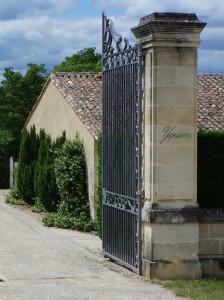
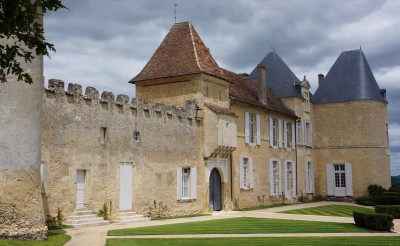
Even just pulling up through the entrance gates of the Chateau, with a simple engraved “d’Yquem” on one of the pillars, there was a sense of style about the place – precise, focused, arranged style. Row after row of well tended vines, manicured lawns, a colour explosion in the flower gardens and clean-lined buildings greet you as you walk around, never mind the iconic and beautiful Château itself which we could see as we were guided around by our perfect hostess Anne, who proved what a small world it is by recounting her time spent in Northumberland, at Alnwick visiting friends!

On 80m high slopes overlooking the appellation the estate has 113ha on gravel, clay, limestone and sandy soil. The ancient geological history of the region is highlighted just across the Garonne by the 20 million year old wall of fossilised oysters in the village of St. Croix du Mont, also famous for sweet wine production.

Château d’Yquem has a dedicated team of staff managing its 33000 vines – 80% of Sémillon (dual spur pruning) and 20% Sauvignon Blanc (single Guillot) – without herbicides, the vines trained lower to the ground that in other appellations. 20 women and 17 men (only the men do the pruning) each have their own plot of vines to tend following time honoured procedures throughout the year and they are well trained in identifying the signs of Noble and Grey rot. There are two older plots of vines, one from over 60 years ago, planted around 1945, and the “younger” one of 30-33 years. In reality only about 100ha is productive, with about 12ha in various stages of grubbing up and replanting, but apart from 6-10,000 bottles of dry white made each year (under the Y – Ygrec – label) it is all destined for the noble wine.

Well, I say “all”, but production is miniscule with each vine pruned to have only 10 bunches, a potential yield of no more than 16hl/ha. 200 hand-pickers are used for each harvest, each team led by one of the d’Yquem staff who double-check each grape offered up before a final selection in the winery by the technical team – if it doesn’t come up to scratch it is not used. The Sauvignon Blanc is watched closely as it is the earlier maturing variety but also less susceptible to the Botrytis.
Grapes for the Ygrec (produced since 1959) are decided very early in the process; if there seems to be a good chance of Botrytis they wait, but if not they go into the dry white which usually ends up as 60% Sauvignon Blanc. Typically during harvest the pickers pass by each vine 5-11 times going grape-by-grape, aiming for at least 20% potential alcohol (300g/l sugar). There are high discard rates, up to 80% of grapes don’t make the grade and by the end it is not uncommon for each vine to yield only one bunch, the “one glass of wine” that is often claimed. There have been 9 vintages of d’Yquem totally abandoned this Century; 1910, 1915, 1930, 1951, 1952, 1964, 1972, 1974 and 1992 – hopefully 2012 will not continue the 20 year pattern that’s starting to form!

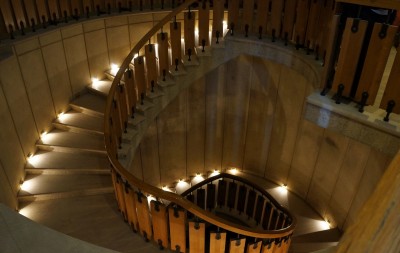
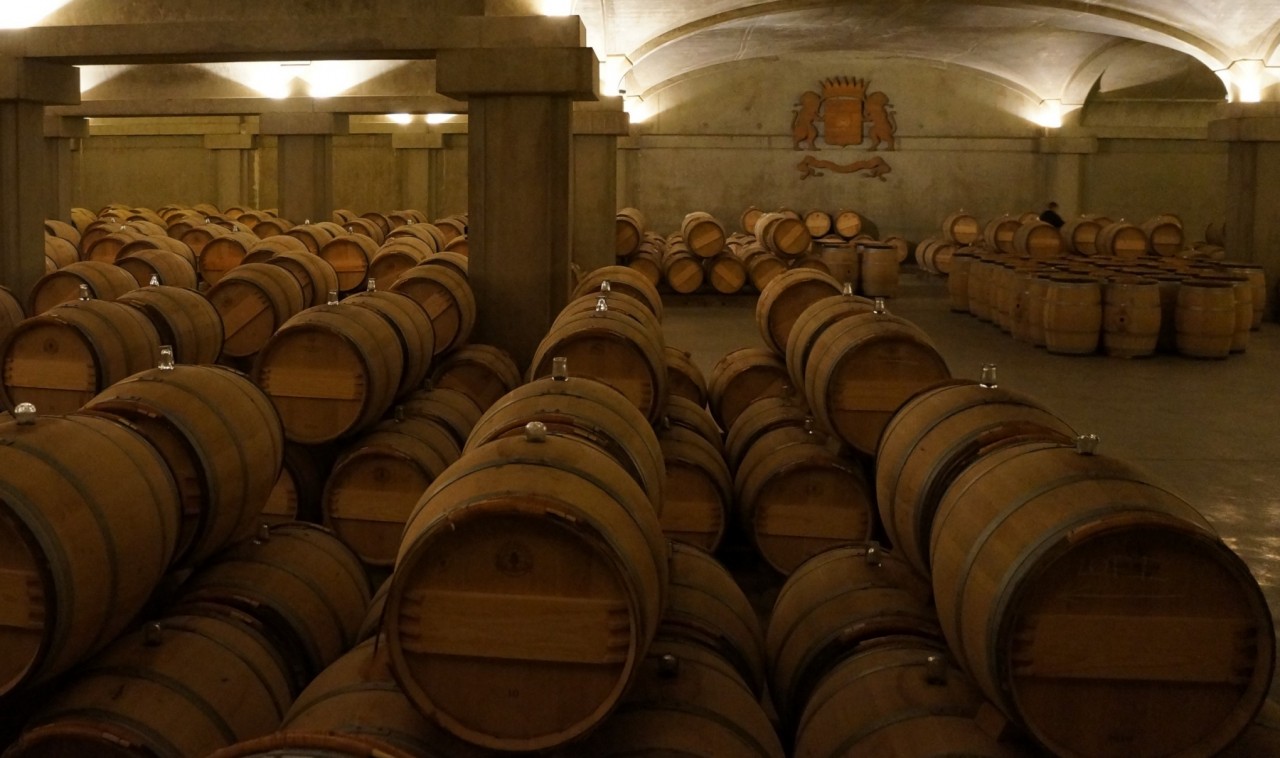
We were led directly down the impressive spiral staircase to the underground cellar, built in 1987, because the original 1826 cellars were getting renovated (as the occasional hammer blow and drilling sound from upstairs testified). Descending into the cool, dark depths we were met by sturdy oak doors which opened to reveal row upon row of barrels; the previous vintage (2010) on the left, the current (2011) on the right and the Ygrec 2011 at the back. The first blending of the 2011 vintage was due to begin that month (July) and there was a spicy bite of sulphur in the air as racking had just been completed.

The 2011 harvest finished on 5th October after 27 consecutive days of picking, 27 passes meaning 27 different fermentations being managed. There was only an hour between picking and pressing of the grapes: the first gentle press using 1bar pressure; a second press at 2bar; a third press at 3bar; then destemming and a final press at 10bars.

Ygrec is fermented in tank before being transferred to 30% new oak (70% “old” Sauternes barrels) for 10 months, but it is the Sauternes that gets the special treatment. The pressed juice goes into 100% new oak (medium toast) starting at 360g/l of sugar and, depending on the volume of grapes from each pass, is fermented either by variety or based on the soil type the grapes originated from. Fermentation is stopped by the addition of sulphite at 125-135g/l and the barrels remain in the ground floor cellars for 6 months before being taken underground for a further 2 years. Of the 27 fermentations from 2011 the lowest volume was 2 barrels, the highest about 80  barrels (at least that’s what I heard, but the more I think about the more I wonder if she said 18?), so there’s a lot of logistics to manage during this phase of the process.
A full audit is kept on each fermentation and which barrels don’t come up to scratch so that any possible failure at any stage of the process can be identified. Of the potential 16hl/ha at start of harvest only 8hl/ha remained following all the selection, discarding and further downgrading.

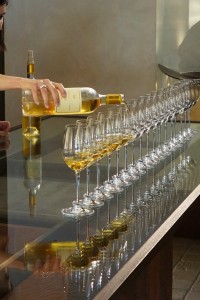
Anne moved us on before the sulphur could really irritate and led us to the tasting room. This was a surprise to us all as we believed that it was a tour only, but Anne calmly lined up 17 glasses and started to pour a cold bottle of the 2006, condensation forming on the outside. In keeping with the whole visit she was precise and elegant during the pouring, each glass identical.
I had to take a video so I can relive the moment when I’m in my dotage, although right now the memory is clear and vivid. I recall seeing barrel spittoons in the pristine room and wondering if they’d even seen a golden drop?

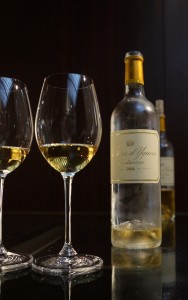
And so to the wine, although I fear my limited tasting skills can not do it justice. The colour was rich and radiant with a golden sheen, the honeycomb-acid nose had a sweet savouriness to it. There was a silken texture, some caramel and a gentle tang of acidity to balance and layered flavours across the palate. Acacia honey and saffron was suggested by Anne for the taste, which I will not discount – honey for certain. The length was superb, an endless finish, sheer bliss. No matter how coloured our judgement may have been by heightened emotions of the occasion it was sublime, coating the mouth with flavours and textures that you wanted to continue forever. I have no doubts on calling this a 5 star wine (97-98pts), probably the first I can truly say that for.

During the tour Anne touched on the previous family ownership of the Chateau, from de Sauvage d’Yquem between 1593 to 1785, then the de Lur Saluces until 1996 when ownership moved from family to corporation with LVMH (Moët Hennessy Louis Vuitton S.A). The French luxury brand installed Pierre Lurton (also director of Château Cheval Blanc) to run the Estate, taking over from Comte Alexandre de Lur-Saluces who stayed around for a further 3 years, no doubt relieved to be finally done with the family in-fighting and punishing inheritance laws. From what I saw and tasted, after more than 10 years of Lurton running the ship, Château d’Yquem, the pride of Sauternes and makers of a golden elixir, is in good hands…with a little help from St. Vincent!

Slainte!

Posted in In Vino Veritas, Wine Producers, Wine Regions | Tagged , , , , , | 4 Comments

Newcastle Wine Fair 2012

Courtesy of the EAT! NG Festival and Newcastle Wine School Sunday 29th July 2012 saw the Newcastle Wine Fair roll into town again, although this year the location had moved from the Civic Centre to the Georgian architecture of the The Assembly Rooms. Following a similar format as previous years there was a mix of independent, local and national retailers showing a selection of their range; Fenwick, Majestic, Carruthers & Kent, Michael Jobling, Tyne Wines, Proteas Wines & Bin21 (Marta Mateus of MartaVine was sharing with Bin21), but this year we were joined this year by Spanish Select Wines, a Newcastle based on-line retailer, and supporting the Tim Atkin Masterclass (see previous blog post) was a Wines of Lebanon table.

The Fair was due to start at 12:30 but well before the doors opened a queue was forming from the reception area and stretching outside, so that the room rapidly filled when the Fair began. With the Masterclass taking about an hour in between this cut back on the total time I had to check out the tables, so I changed tactics from my normal “taste as much as you can” philosophy and screened the lists looking for interesting sounding wines I hadn’t tried before.

The notes start from Wines of Lebanon (which I went to first) and then move around the room anti-clockwise for no particular reason.

The Wines of Lebanon table was hosted by Laura Kent (Yorkshire Wine School) and local wine expert Richard Whinney promoting a selection of Lebanese wines available in the UK. The Domaines de Tourelles 2011 Blanc (M&S, £8.50) Muscat/Viognier blend was rich and enjoyable, with the IXSIR Altitudes White 2010 (£15.95 from Great Western Wine) adding Sauvignon Blanc and Sémillon to the same blend to create a delicate wine; well balanced with complex but almost hidden, flavours.
For the reds the Château Ksara  Cuvée IIIème Millénaire (their flagship red, £25 from Strictly Wine) showed well with fruity flavours and a rich texture, as did the IXSIR Altitudes Red 2009 (£15.95, Great Western) with vegetal flavours and a menthol lift.
Sadly the Château Ka Source Blanche and Rouge never turned up for the tasting (the red replaced in the Masterclass by Bin21’s superb Château Musar 2003) – although I’ve since discovered that Carruthers & Kent have the Source Blanche for £10.99.

..who’s that in the background?

That leads us nicely onto Carruthers & Kent in persons, with both Claire and Mo doing a sterling job pouring and chatting with the hordes (and their table was particularly busy throughout the afternoon). A full-on Terra Alta 2011 Garnacha Blanca (£8.99) with intense flavours started off the whites, but the Alain Paret 2010 Viognier (£11.99) was in a different league, with precise, clean, focussed flavours – a mini-Condrieu without the price-tag. For red the Lamadoro 2011 Negroamaro (£8.99) was fruity and smooth while the 16 Stops 2011 McLaren Vale Shiraz (£8.99) was meaty with a little spice, both good.
It’s also worth mentioning their Sparkling Red which they were pouring (a class of wine I usually put into the “abomination” category), the Alma 4 2007 Bonarda from Mendoza in Argentina (£18.99). Previous forgettable forays with sparkling reds have been Australian Shiraz or Merlot, creating scarred memories and a reluctance to even try new examples but, on advice from a friend, I tried the Alma 4 and found myself rather ashamedly enjoying its spicy fruit (although probably not enough to buy any for personal consumption).

At the Majestic table manager Greig Wilson was there with a global cross-section of wines including the obligatory Champagne which the Wine Fair participants always seem to make a bee-line for. I really enjoyed their chewy, chocolaty Matsu 2009 El Recio from Toro, Spain (£15.99); delicious old-vine Tempranillo made biodynamically and aged in French oak.

Next door Spanish Select were doing a roaring trade and with 30 minutes of the tasting left they were pretty much all out of wines to pour. Unfortunately I’d only managed to try a couple of their range but hopefully we’ll cross paths again and I’ll have a chance to give them my full attention.Joining Bin21 owner Patrick Eyres behind the table were Marta Mateus and new recruit Owen Pledger (ex- of Oddbins and Dennhöfer, now to be found in the Hexham store), although for some reason their wines weren’t on the main wine list and they only had a basic tasting sheet showing a handful of wines (no vintages or prices indicated). It was the reds I enjoyed most here, starting with the Casa Santos Lima Azulejo, V.R. Lisboa with juicy fruit and quite subdued elegance, unlike the brash Grant Burge Benchmark Shiraz from Australia’s Barossa Valley which had chewy, sweet fruit. The Shiraz was so dangerously drinkable as was the Marqués de Reinosa Rioja which had complex fruit and oak flavours, although it is a touch young at the moment.

Michael Jobling was there in person overseeing his table pourers and joining in with the conversation. A conservative selection of wines was headed by a good value Albariño, the palate-coating Bodegas Coto Redondo Senorio Ribios from Rias Baixas, Spain (£10.20) and a meaty Don Cristobal Finca La Nina Malbec from Mendoza, Argentina (£7.38).

I found myself a little underwhelmed by the Fenwick list which began with a Chilean Sparkling wine infused with Patagonian strawberries (?) but it recovered with an unusual offering from Alsace, the Hugel 2011 Gentil (£10.49) blend of Gewürztraminer, Pinot Gris, Riesling, Pinot Blanc, Sylvaner and Muscat. “Gentil” is an traditional term used for a melange of the Alsace white varieties –  a high-end Edelzwicker where at least 50% of the blend must be Pinot Gris, Riesling, Muscat or Gewürztraminer – and this had a light start, pleasant enough mid-palate but an amazingly long and complex finish. Another tasty wine was the Portia 2008 Crianza, Ribero del Duero, Spain (£13.99) with typical ripe flavours for the region.

Then to the penultimate table and a couple I hadn’t seen for a while, Tony and Carolyn Raven of Proteas Wines. The company has been running under the radar for a while, so it was good to have them back, especially as they’ve added a few new wines to the range (which was beginning to tire a little, much as though I love the Umkhulu Akira 2001 it has been nearly 3 years since I first tasted it and it was mature then). Two whites grabbed my attention immediately, both from the Seven Springs Vineyard in Hermanus, South Africa. The 2011 Unwooded Chardonnay, W.O. Overburg (£11.95) showed clear minerality under delicate tropical fruit, then Tony poured a glass of the 2010 (Oaked) Chardonnay to compare and it showed ripe fruit with toasty vanilla – both were excellent examples of the two modern styles of Chardonnay done extremely well (remember I’m a recovering A.B.C.). Seven Springs is a new winery (setup in 2006 with the first vintage in 2010) owned by English couple Tim and Vaughan Pearson and even more encouraging is that the wines are made by a 24 year old local winemaker, Riana van der Merwe – I predict a bright future for this venture!

And so finally to the last table and a familiar face, Irwin Thompson of Tyne Wines. I am guilty of sometimes neglecting Irwin at tastings as he suffers something of a backlash at only having French wines in his range, and a lot Beaujolais amongst that. Both country and region often fail to excite in comparison to the larger wine world, however, there is also something reliable about them when done correctly and his speciality is uncovering diamonds in the rough (I also later noticed Tim Atkin tweeting “Just discovered a great Beaujolais importer in Newcastle”).
I loved the bon-bon nose of the Domaine du Griffon 2010 Le P’tit Blanc (£8.95) a mere Vin du France as it is a white Gamay, the first I have tried and very palatable. I also enjoyed the same Domaine’s sparkling version, La P’tite Bulle NV (£10.95) – enough to buy a bottle to join my miniscule collection of sparkling wines.
For the reds I particularly enjoyed the soft, young raspberry fruit of Domain Champagnon 2009 Moulin-a-Vent, Beaujolais (£11.65) although there were 3 other reds (Chiroubles, Fleurie and Minervois) which I’d more than happily drink.

As usual I was one of the last to leave, looking for just one more wine to taste and hoping I hadn’t missed anything spectacular, although I probably did!

Now that I’ve had time to review my notes, decipher the occasional scrawl and dredge my memory of the day, I must admit there weren’t as many stand-out wines as I’d like to have seen, but saying that there weren’t too many stinkers either! My top 3 wines of the show were the Alain Paret Viognier, the Château Ksara Cuvée IIIème Millénaire and either/both of the Seven Springs Chardonnays, with probably the Finca la Nina Malbec taking best QPR wine.

It was great to see such an enthusiastic turnout to the event and even better to see a Master of Wine mixing with the crowds, hopefully a sign that the North East wine scene is heading in the right direction!

Slainte!

Posted in Local Tastings, N.E. Retailers, Wine Festivals | Tagged , , , , | 3 Comments

Tim Atkin and Lebanese Wines

Last Sunday the 2012 EAT! Festival Wine Fair opened its doors in a new venue, the grand surroundings of the Assembly Rooms, Newcastle. As usual the region’s local wine retailers turned out in force to show off their bottles – I’ll cover that in a separate post – but this time round there was a special treat in store for those lucky enough to have got tickets for it – a Lebanese Master (of Wine) class by Tim Atkin MW, a familiar face to Saturday morning TV viewers (see my brief resume of Tim here).

Tim was already in the main hall when the doors were opened at 12:30, sitting at a table showing off his other passion, photography (see TimAtkinPhotography.com for a glimpse of his portfolio). As a prolific tweeter he was often seen on his ‘phone but was happy to chat to anyone passing by (including fellow NEWT Elaine Orrick who got a hug on account of having been on a wine trip with Tim before).
The Masterclass began at 2pm and had 3 round tables set out with the 6 wines we were to be tasting, with about 40 people sitting expectantly. Tim began with a short but detailed history lesson of Lebanon covering the political, geographic and primarily viticultural background of a country that has an area half the size of Wales and a population just under that of Scotland. On eastern edge of the Mediterranean the rapidly rising inland plateau that is the Bekaa Valley (home to most of Lebanon’s wine industry) averages 900-1200m giving up to a large temperature variation between cool nights and hot days, excellent conditions for grapes.

Although the winemaking history of the area stretches back past the Levant and into ancient Phoenicia it was the French who left their indelible mark on the country, first with Jesuit monks who came via Algeria and set up the first winery, Château Ksara, in 1857, and then after World War I, when France was given mandate over Lebanon. Thousands of thirsty French soldiers and bureaucrats moved in and started a golden age for wineries in the country which lasted long after they left, until the start of the bloody civil war in 1975 which decimated the industry so that by the end only 5 remained; Château Ksara (1857), Domaine des Tourelles (1868), Château Nakad (1923), Château Musar (1930) and Château Kefraya (1946). However, since then the industry has expanded again to nearly 40, including Massaya (1998), Château Ka (2005), Château St. Thomas (1990) and IXSIR (2009).
The National Union Vinicole du Liban organisation, whose membership includes the majority of these wineries, set up Wines of Lebanon as a promotional campaign to popularise Lebanese Wines in the UK and it was under this group’s banner that Tim led us through the first wine.

Château Ksara 2011 Blanc de l’Observatoire. As well as being the oldest winery in Lebanon Ksara is also the largest, with 420ha of vines (although their website only claims 340ha) and about 38% of the country’s 7.2 million bottles (briefly overtaken by Château Kefraya after the war).
This pleasant white is an unoaked blend of Clairette, Muscat of Alexandria and Sauvignon Blanc and had a little matchstick aspect on the nose. It was herbal dry with nice balance and light to medium bodied – a good starter wine, but the only white of the session (in the main hall two more were on show and were both arguably superior).

Domaine des Tourelles 2011 Rosé. Tourelles is based in the village of Chtaura in the Bekaa Valley and produces 150,000 bottles a year. Wines of Lebanon marketing quotes the Financial Times in calling them  “the most seductive winery” in Lebanon  – but if they’re referring to Mark O’Flaherty’s excellent “Sideways in Lebanon” piece then it’s actually “the most seductively ramshackle and atmospheric winery in the country”!
Their rosé is a Syrah, Cabernet Sauvignon, Cinsault and Tempranillo blend made in the Saignée style, where juice is bled off early from red wine must, concentrating the red and providing lightly coloured juice as a by-product for Rosé fermentation. It had a delicate nose with light berry fruit and good balance in a sweet fruit style (not candied though) with a clean, dry finish – not too complex but very drinkable.

Château Ksara 2010 Réserve Du Couvent. Back to Ksara again, whose wine cellar is an expanded Roman tunnel complex stretching for almost two kilometres with ideal wine storage temperatures.
Their oaked red is a Cabernet Sauvignon, Syrah, Cabernet Franc blend which gave a spicy mineral nose and a touch of gun smoke. The wine was lightly vegetal and a touch green, acceptable but not particularly thought-provoking, so we quickly moved onto the next red, which should have been Château Ka 2008 Source de Rouge but that failed to appear so a last minute stand-in was provided by Paddy Eyres from Bin21 in the form of….

Château Musar 2003. Musar is the Marmite of the wine world, loathed by some for its volatile acidity and tendency for farmyard qualities – loved by others for similar reasons. I am unashamedly in the “love it” camp as anyone who has read my blog will know!
The 2003 is a Cinsault, Carignan, Cabernet Sauvignon blend and had a delicious nose of burnt spice and a suggestion of fortified strength. It was a delight to drink, smooth and rich with chocolate undertones – a very popular wine in the room and for me on par with the ’02 and approaching the ’99 in terms of quality.

At this point in the proceedings Tim went off on a tangent talking about interesting wines or, in the case of Pinot Grigio, uninteresting ones. He made no bones about his dislike of the glut of dull, predominantly Italian, ones and described his design for the perfect Grigio glass, with a hole at the bottom! Moving onto the next wine he noted the variety, Pinot Noir, and said it is meant to be close to the smell of male pheromones, then recounted an amusing story about a well known friend of his (who isn’t Australian, nor a Wizard) who used to dab aged Burgundy behind his ears before a date (this later led me to one of his old articles entitled And all because the lady loves…). I digress….

Château St. Thomas 2008 Pinot Noir. Founded by Saïd Touma (Arabic for Thomas) and now run by his son Joe-Assaad Touma, who is also the winemaker, this seems to be a respected boutique winery and the first in Lebanon to make Pinot Noir.
The nose was typically of the grape, musky perfume (matching the pheromone story!) with a little tobacco on the taste. An enjoyable, young wine, with firm tannins in need of a little mellowing a touch.

IXSIR 2009 Grande Reserve. The final wine of the tasting was from a winery I’d never heard of before, but IXSIR, based further North in Batroun, is a rising star and unusual in embracing modern and environmental technology, as described in this (Lebanon) Daily Star article.
The darkly coloured red is a Syrah, Cabernet Sauvignon blend with 40% new oak (French of course) and had a full nose of rich fruit and perfume. It was a very approachable wine, tannins a touch raw edged but still young and likely to improve further.

There was a well deserved round of applause for Tim at the end, he’d done a good job at introducing a lot of people in the room to Lebanese wines and was pretty much what I’d expected after all the tweets and articles read and Saturday Kitchen appearances seen.
I stood in line for the required Kodak moment as the room emptied and then moved back into the main hall, Tim staying a little longer before catching his train back to London at the end of the afternoon. I don’t know if he had a chance to try many of the wines on offer there but hope he had a good time in Newcastle – I know I certainly did.

Slainte!

PS. The best wine for me was the last minute stand-in kindly supplied from Bin21, the 2003 Musar. For more Lebanese wine information read Michael Karam’s “Your Wine Style” site.

Lebanese wines available locally;

  • Château Musar at Waitrose, Richard Granger, Michael Jobling, Majestic, Bin21 and Corkscrew Wines (Carlisle).
  • Massaya at Richard Granger.
  • Château Ksara Clos St. Alphonse at Marks & Spencer.
  • Château Ka at Waitrose
Posted in Local Tastings, N.E. Retailers, Wine Festivals, Wine Producers, Wine Regions | Tagged , , , | 2 Comments

Airén in decline

What is the most common grape variety in the world? Depending on how that question is interpreted one of the answers that should come your way is Airén, Spain’s most planted, but still obscure, grape. More accurately it is the acreage of this variety that is the most abundant – Cabernet Sauvignon, Merlot and Chradonnay all have more vines globally – as Airén is planted to a mich lower density compared to its more well known cousins.

This isn’t an article on the Spanish White grape though, at least not directly. If you want details, facts and figures check out Fringe Wine’s blog post from earlier this year or CataVino’s post from a few years ago. No, this post is merely as a future reminder to me that, after 6 years of serious wine obsession (including over a year of seeking out unusual or uncommon varieties), I finally had my first Airén wine…. and that it did nothing to make me want another one!

The wine in question was the Castillo de Soldepenas Blanco, a non-vintage wine courtesy of Costco. To be fair I didn’t actually buy this wine (I think it retails for about £3 a bottle) as it was a giveaway for renewing Costco membership, but I don’t believe you can easily find this variety in much higher price ranges no matter how hard you look – telling you something about its role in the Wine World (of course there will be the occasional quality example to prove the rule, but you know what I mean).

At 12% alcohol this wine was a D.O. Valdepeñas (Castile-La Mancha) with a light floral, not unpleasant nose. However, on the palate it was somewhat insipid; thin, lacking body and depth of flavour. There was some bitterness throughout with a lemon sherbet undertone, but the acidity was too obvious, without any compensating factors.

The only consolation was that it worked well as a spritzer with a touch of flavoured fizzy water (tangerine seemed the best) – a shocking admission I agree, but when a wine can’t be enjoyed on its own the only other alternative is down the sink!

I’ve just drained the last drop from my glass, “neat” this time to reconfirm my original notes and impressions. I’ll call this wine a 77 pointer and be done with it, onto the next bottle of something more interesting.

Slainte!

Posted in In Vino Veritas, Just having a drink | Tagged , , | 2 Comments

Bergerac and Bordeaux, 2012 summer holiday

On Saturday 7th July 2012 we touched down at Limoges airport in France with a group of (almost) complete strangers to begin a wine themed tour of Bergerac and Bordeaux organised by local company AdVintage Wine Services, run by Suzanne Locke and Bill Oswald. A week later we touched down back at Newcastle amongst good friends with a bag full of wine and happy memories that will never be forgotten.

I first heard about AdVintage last year when looking for local wine tastings to put on this Blog’s Events Page (the link is to its current incarnation as part of the North East Wine Tasting Society’s site). A couple of fellow NEWTS also mentioned they’d been on previous tours organised by Bill and Suzanne so when I saw their 2012 trip was to Bergerac and Bordeaux (and fitted in with when I could get time off work) then it seemed like a perfect match.
If what follows sometimes comes across as an AdVintage advert this is purely because we really did have such a good time on the trip, but this was our holiday, which we booked and paid for ourselves, and we did not receive any preferential treatment to other members of the group (it is a fact I have long understood that writing a wine blog, especially one that is read by so few people, is unlikely to change my lifestyle!).

AdVintage always try to arrange tours with flights from Newcastle Airport (previous experiences with a coach-only tour and flying out of Leeds-Bradford have proved unpopular with the clientele) which is why 17 of us arrived at Limoges. Whilst we were the youngest of the group and newcomers (all the others had been on at least one trip before and many knew each other) we were immediately welcomed as if we had known the others for ages (to be fair one there was one other NEWT, Elaine, on the trip along with her brother and friends who I had met before, so it wasn’t a completely unknown situation).

Outside in the brilliant sunshine a coach awaited for the 2 hour ride to Bergerac itself, our first meeting with le chauffeur, David, who would be with us the whole week.
Bill’s prepared announcements were abandoned as the tannoy system in the bus wasn’t working – not an auspicious start but it was fixed for the remainder of the week! – so we enjoyed the scenery as we drove past the lush green countryside (it wasn’t just the UK getting more rain than normal) through the heart of the Perigord region, with Foie Gras and Truffles featuring highly on signs (even on what appeared to be a roadside café!).

Finally arriving at the Hotel du Commerce we checked in just as the heavens opened and rain of North East proportions fell, which had us slightly worried for the rest of the week! Dinner, where we were joined by the 2 remaining members of the party who had arrived from elsewhere in the UK, was a boisterous affair, lubricated by the free bottle of red Bergerac provided in each room (Les Pujols 2009, a little rustic round the edges but smooth & fruity and very quaffable) and Château La Fougere 2010 Rosé from the hotel bar (equally quaffable, and the first of many thirst quenching Rosés for the week). What also became clear at that first meal was that we were going to be well looked after by the hotel as the food was superb (from roasted duck legs on that first night through confit chicken, foie gras, guinea fowl, salmon, more duck, Pollock, enormous and tasty salad starters… only a too-rare and chewy steak didn’t hit the mark) and we were given our own reserved dining and wining area which helped foster “group bonding” from the beginning.

For the rest of the week we woke up each day to partly cloudy skies which always managed to clear by lunchtime and give relatively sunny afternoons with average temperatures of 23-25C, much less than normal for the time of year but perfect for our excursions. Apart from a little rain on the Sunday morning we didn’t see a drop until the last evening and even that was when we had finished for the day so, all in all, the weather was on our side.

The format for the week was straightforward;

  • Book-ending each day was a hotel breakfast and evening meal included in the package (lunch was our responsibility). As an added bonus AdVintage had negotiated that wine bought during the tasting visits can be opened at dinner without corkage costs.
  • On Sunday, Monday, Wednesday and Friday there would be a coach journey to two or three wineries in an area for a tour and tasting, with a lunch and tourism stop in a nearby town (Bergerac, Saint Emilion, Cadillac and Eymet).
  • Tuesday, Thursday (and Saturday morning) were free days to do as we pleased, which, for Sarah and I, meant walking until our feet hurt and taking lots of photographs!

For the tasting days there were 4 themes for the wineries to try and cover the range of wines produced in the Bergerac and nearby Bordeaux area;

I’ll cover the specific winery visits in separate posts with my the usual surfeit of information, technical data, tasting notes etc. (I was being my usual self and filling pages of my notebook each day!) but the most memorable and enjoyable were La Grande Pleyssades, Tournefeuille, Verdots and, unsurprisingly, d’Yquem.

For the lunch breaks Saint Emilion on Monday was a perfect tourist trap with ancient churches and fortifications (including an ascent of the Tour de Roy), wine shops galore, rustic and modern lunch options and a new experience for me; sparkling Crémant de Bordeaux courtesy of Les Cordeliers, set in a 14th Century Cloisters (see this Decanter piece from last year).

On Wednesday it was the Bastide of Cadillac where we ate bread & pâté on the banks of the Garonne and viewed the impressive château of the Dukes of Épernon, while on Friday it was another Bastide at Eymet where truffle-laced tagliatelle was washed down with sweet Monbazillac before a sedate walk around the ancient town in baking sunshine.

For our free days we took a train trip to Bordeaux on the Tuesday and tramped around the city (perversely managing to ignore wine the whole time). On Thursday we did something similar for Bergerac (adding to the Sunday afternoon expedition) but included a visit to the Maison du Vin where Xavier de la Verrie of Château Jeanbrun was pouring his family wines at the dégustation table, including a delicious rosé we bought for dinner the next night (although a red 2009 Bergerac fared less well).

Our last morning before leaving was meant to be a shopper’s paradise at the Bergerac Saturday market, a grand affair covering several streets and squares. However due to 14th July being Bastille Day in France the market was brought forward to the Friday (we drove passed it on our way to Monbazillac) and instead we were treated to the pomp and circumstance of local Police, Army, Veterans and what seemed to be the entire Bergerac area Fire Service on parade!

The coach ride back to Limoges was a relaxed and slightly sobering affair, few of us relishing the end of a superb and very social week.
At last count we bought 9 bottles and 2 half bottles which we shared in the evenings
(with few exceptions everyone in the group shared wine they had bought amongst their neighbours at dinner, including two extremely generous ladies, Sue and Roz, who shared full bottles of Château Guiraud and Château Monbazillac with the other people at our table) and brought 4 bottles and 4 half bottles back home (5 of which have that golden sheen that Sarah loves!).

For me this trip had a perfect mix of wine visits and tastings (with enough technical aspects to keep me involved), tourist and social activities and I will watch with interest where AdVintage plan their next summer tour to, because, based on this experience we are likely to want to go again – although that visit to Château d’Yquem is going to be hard to top.

Slainte!

PS. For more photos from the trip go to the North East Wino Facebook page, starting with the Bergerac album.

Posted in In Vino Veritas, Wine Regions | Tagged , , , , , , | 4 Comments

Wine & Pies?

Wine and Pies may not seem to be the most obvious of bedfellows, the latter more associated with a beer or mug of tea, but as the pies in question are self-styled gourmet pies then why not trade up on the lubrication as well?

When I first heard of the New Zealand Gourmet Pie Company I hadn’t realised how much New Zealanders (& Australians for that matter) love a meat pie but it seems that they do more than most, enough for an ex-pat to set up in business here in the North East (see more on Sky Tyne & Wear). Accompanying the pies at The Castlegate on Thursday 21st June were a selection of wines from PortoVino, the local Portuguese importer run by Alan Holmes and Paul Raven.

The format was simple – 7 pies, 7 wines. Try as much as you like of each and decide which was the best Pie & Wine match up.

On the pie menu were;

  • Steak & Cheese. Rich and beefy with a hint of blue cheese.
  • Minted Lamb. Deliciously fresh with tender lamb.
  • Thai Chicken Curry. Pleasant enough although, for me lacking, strong flavour.
  • Peppered steak. Delightfully peppery.
  • Chilli Beef. ¡Ay, caramba! this had a kick of chilli!
  • Spinach and Goats Cheese. My personal choice, creamy with sweet potato.
  • All Day Breakfast. A hearty bite, but not my favourite.

For the wines;

  • Terra da Lobos White. Fernao Pires and Sauvignon Blanc give a dry, herbal wine with a short finish.
  • Tons de Duorum White. An eclectic blend of Viosinho, Rabigato, Verdelho, Arinto and Moscatel from this Duoro producer giving a pungent floral nose and complex herbal bitterness, stylistically similar to a Rueda Verdejo or Sauvignon Blanc.
  • Dalva White Port. Luscious, smooth and sweet, this rounded, moreish wine was a big crowd pleaser on the night.
  • Terra da Lobos Rosé. A blend of grapes including Touriga Nacional and Castelão gives a simple, clean and fresh rosé with a nod to sweet.
  • Terra da Lobos Red. Castelão and Cabernet Sauvignon make a smooth, fruity red with fine, dry tannins and a little graphite on the palate.
  • Marques de Borba Red. Another complex blend including Trincadeira, Alicante Bouschet, Aragonez (Tempranillo) and Touriga Nacional. This was fruity with young tannins, quire smooth to drink.
  • Boas Vinhas Red. Touriga Nacional, Alfrocheiro, Tinta Roriz (Tempranillo) which gave a slightly harsh taste with a bitterness to the tannins and some heat on the finish.

What I loved about the evening (apart from the endless choice of wine and pie combinations) was the chance to taste wine with food, something rarely done outside of a meal. Although the camouflaging effect of the food flavours meant I couldn’t pull out all of the subtleties of the wine  it highlighted an undeniable truth, wine and food are meant for each other….including pies!!

As for the best combinations – for each pie I found a wine that worked, or looking from the other side for each wine I found its partner pie.

The best combinations were;

  • Thai Chicken Curry with Tons de Duorum white; the herbal bitterness of the wine offsetting the lemongrass and coconut in the pie.
  • Spinach and Goats cheese with the Dalva White Port; both equally creamy and sweet.
  • Peppered steak with the Marques de Borba red; the wine’s young tannins working well with the pepper.
  • Chilli Beef with the Terra da Lobos red; the smooth fruit managed to tame the fiery heat of the chilli better than the others.

The final challenge of the night was to suggest the best match for the All Day Breakfast pie, not easy with the mix of textures and flavours (Sausage, Bacon, Egg & Tomato).
The White Port did well, as did the Boas Vinhas red, but since the piece of pie had more sausage I favoured the red (though the egg, tomato and bacon part loved the Port!)

So there you are, Wine and Pies. It works!

Posted in Local Tastings, N.E. Retailers | Tagged , , , | Comments Off on Wine & Pies?